







Price: GBP10.19
(as of Feb 03, 2026 07:49:53 UTC – Details)
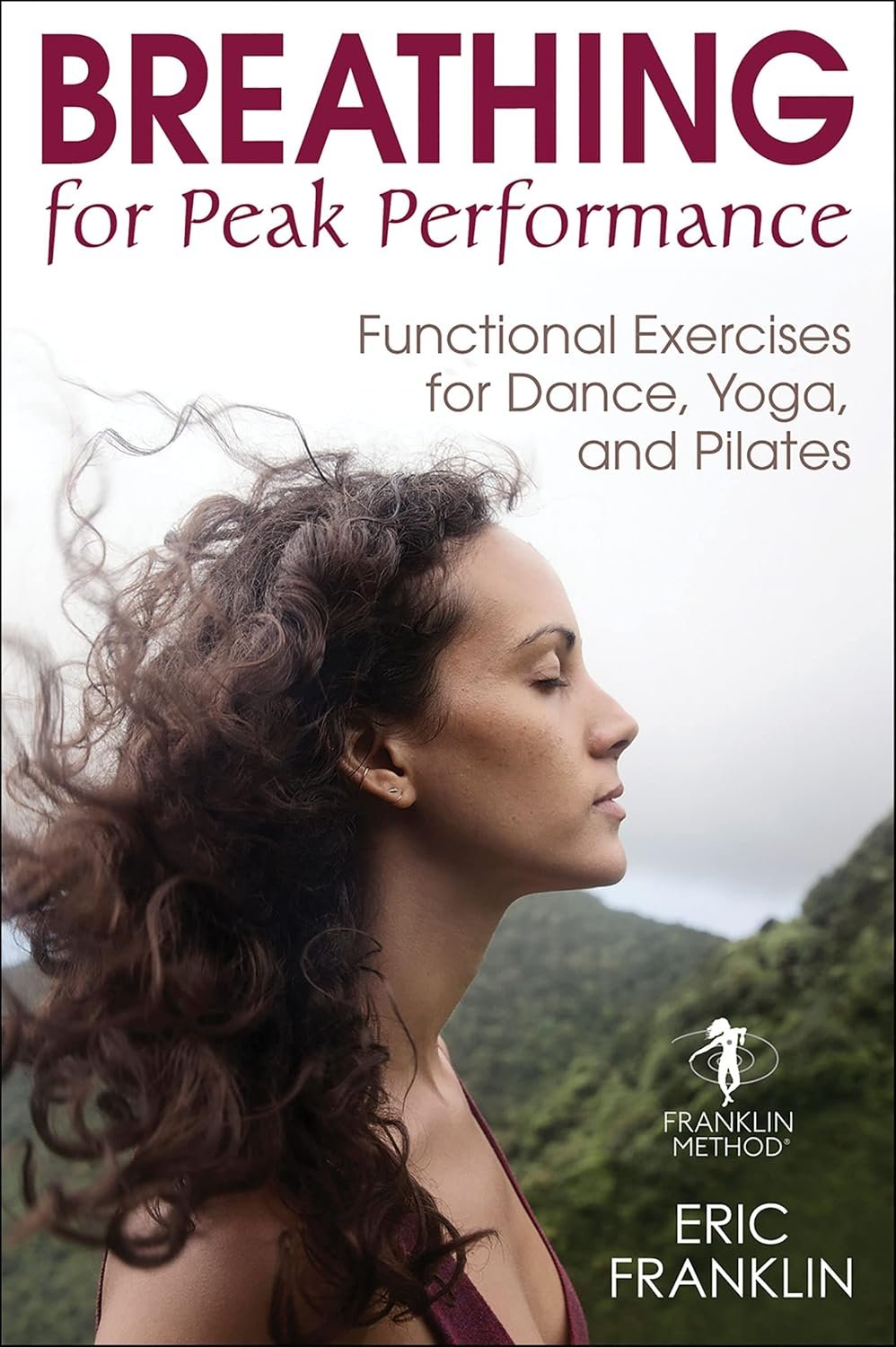
Most people give little thought to how they breathe—but if they want to have more energy, be more alert, and improve their exercise and sport performance, they should, says renowned author, dancer, and movement educator Eric Franklin. “Breathing is essential to our survival, it is necessary for energy production, and it is something we do about 20,000 times a day,” says Franklin, who has taught at various universities and ballets and coached world champions and Cirque du Soleil artists in his Franklin Method. “We stand to benefit if we improve our breathing.” In Breathing for Peak Performance, you will learn how to improve your own breathing and the breathing of those you coach and work with. This concise, heavily illustrated text will help you do the following: • Learn to improve your breathing function to benefit your health and improve your sport performance and daily living • Understand the anatomy of breathing—all the muscles and joints involved and how they work together • Practice 35 breathing exercises to improve functional breathing technique and performance in dance, yoga, and Pilates • Study and train the vital muscle of breathing—the diaphragm—grasping how it interacts with the abdominal muscles and other muscles associated with breathing • Comprehend the function and movement of the rib cage as it pertains to breathing • Integrate all the elements involved in breathing, including the lungs and inner organs, for optimal breathing function “The ideas and exercises in this book are tried and tested over 30 years of teaching, and they have been used by dancers, yoga practitioners, Pilates instructors, actors, vocal coaches, singing coaches, physiotherapists, swimmers, runners, and many others,” says Franklin. “When you perform the exercises, you will feel more energetic, focused, and relaxed. You will also gain an understanding of how to integrate imagery into your breathing practice.” Franklin presents the exercises—many accompanied by full-color illustrations—through his famed Franklin Method, which combines movement, imagery, and touch. His method helps practitioners relearn, in this case, correct breathing procedure to maximize breathing function. “To improve your breathing or to coach someone who needs to improve, first you need that solid understanding of anatomy,” Franklin says. “And you need to understand the habits that can hinder efficient breathing—tension, poor posture, and negative thinking, among others.” Franklin presents a recommended daily practice at the end of the book, which is ideal for individuals, professionals, coaches, practitioners, and students of dance, yoga, and Pilates. His detailed description of the anatomy, his presentation of the exercises, and his ability to integrate this information and make it very practical through his Franklin Method make this text an important reference for those who are looking to reach their peak performance in sport and in life.
From the Publisher

Figure 1.2 The diaphragm in relation to other anatomical structures.

Understanding the anatomy and optimal functioning of breathing
Breathing for Peak Performance will help you improve your breathing and the breathing of those you coach and work with. By optimizing your breathing, you can benefit your health and improve your sport performance and daily living.
The text describes the anatomy involved in breathing; offers 35 breathing exercises to improve functional breathing technique and performance in dance, yoga, and Pilates; and shows you how to integrate all the elements involved in breathing for optimal function.
The book uses the Franklin Method—which combines movement, imagery, and touch to improve functional breathing technique—and offers a recommended daily practice.
Excerpts

Figure 1.6 Modeling the movement of the abdominal wall and diaphragm during (a) inhalation and (b) exhalation.
(Excerpt from page 9: Visualizing the Interaction of the Diaphragm and Abdominal Muscles.)
As you inhale the diaphragm descends like a piston, displacing the organs downward, forward, and to the sides. You will use your hands to visualize the interaction between the movement of the diaphragm and the abdominal wall. You can do this exercise standing, sitting, or supine.
…
Franklin Method

Figure 4.11 Using a band to train your breathing.
(Excerpt from page 58.)
Using a band, such as a Franklin Method medium-strength band, can be an effective means to stretch and strengthen the muscles of breathing.
1. Start the exercise in a standing position with a fairly wide stance. Place the band
around the middle of your back near the thoracolumbar junction. Exhaling, flex
your spine while pushing into the band as if it were a hammock (figure 4.11).
2. Inhaling, return your back into extension. Use the band to push the back forward and gain more stretch.
3. Repeat this action four times, and return to the starting position.
…
Franklin Method

Figure 4.2 Transversus abdominis (TA) during (a) inspiration and (b) expiration.
(Excerpt fromp age 47 Abdominal Muscles and Breathing)
The TA functions as a contractile tube surrounding the abdominal viscera. It works antagonistically with the diaphragm to help the organs move inward and upward during exhalation in all but the supine position. The
TA is a stabilizer of the lumbar spine through its connections to the TLF. Its fascia splits into the sheaths that surround the erector spinae. Anteriorly it forms the posterior wall of the rectus sheath. The TA effectively can reinforce the posterior and anterior body wall while it participates in breathing (figure 4.2). …
Franklin Method
ASIN : B07M9T59YJ
Publisher : Human Kinetics
Accessibility : Learn more
Publication date : September 6, 2018
Edition : 1st
Language : English
File size : 72.5 MB
Screen Reader : Supported
Enhanced typesetting : Enabled
X-Ray : Not Enabled
Word Wise : Enabled
Print length : 69 pages
ISBN-13 : 978-1492587569
Page Flip : Enabled
Reading age : 18 years and up
Best Sellers Rank: #1,270,825 in Kindle Store (See Top 100 in Kindle Store) #249 in Pilates (Kindle Store) #275 in Dance (Kindle Store) #826 in Dance (Books)
Customer Reviews: 4.4 4.4 out of 5 stars (22) var dpAcrHasRegisteredArcLinkClickAction; P.when(‘A’, ‘ready’).execute(function(A) { if (dpAcrHasRegisteredArcLinkClickAction !== true) { dpAcrHasRegisteredArcLinkClickAction = true; A.declarative( ‘acrLink-click-metrics’, ‘click’, { “allowLinkDefault”: true }, function (event) { if (window.ue) { ue.count(“acrLinkClickCount”, (ue.count(“acrLinkClickCount”) || 0) + 1); } } ); } }); P.when(‘A’, ‘cf’).execute(function(A) { A.declarative(‘acrStarsLink-click-metrics’, ‘click’, { “allowLinkDefault” : true }, function(event){ if(window.ue) { ue.count(“acrStarsLinkWithPopoverClickCount”, (ue.count(“acrStarsLinkWithPopoverClickCount”) || 0) + 1); } }); });


Reviews
Clear filtersThere are no reviews yet.